For Galapagos trip enquiries, call us toll free at: 1-877-986-6435, 1-877-667-7445
About the Galapagos Islands
Click here
to Request
a Call Back
Galapagos
Deals and
Promotions
Call the Galapagos Experts. TOLL FREE!
  • 1-877-667-7445
  • 1-800-811-4037
  • 0800-051-3847
  • 0366-2845-3321
  • 0970-407-498
  • 02-8005-8069
  • 022-575-2078
  • +593-2-2527-026
Free Trip Planning

Office hours are 9am-5pm. Mon-Fri. GMT -5hrs. Eastern Time

Galapagos Home > About the Galapagos > Galapagos History > Charles Darwin in the Galapagos
Galapagos Conservation Trust

Charles Darwin in the Galapagos

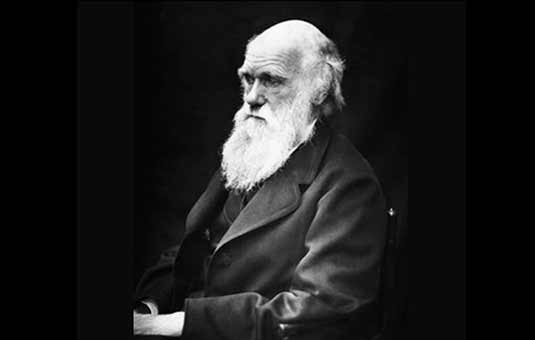
Perhaps our first association with the word "Galapagos" is the name "Darwin" – and not without reason. The theories of the Galapagos' most famous visitor have highly influenced western thought inspired over 150 years of biological research. And it was the Galapagos Islands, after a visit of only four islands in five weeks, which were to have a resounding impact on the formations of Darwin's Theory of Natural Selection.

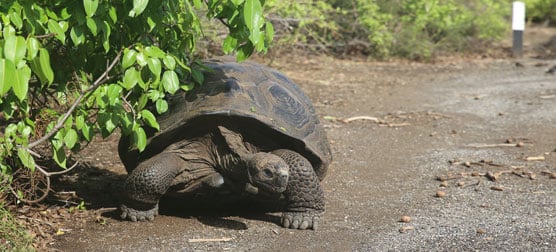
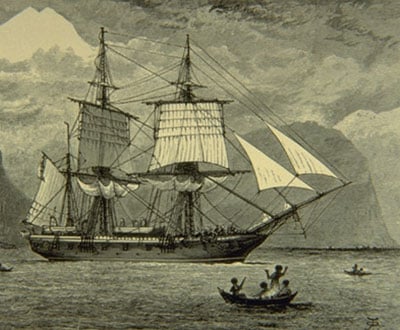
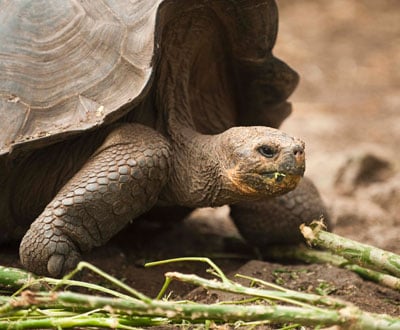
A rather unmotivated and failing medicine scholar, Charles Darwin was the second choice of Captain Robert Fitzroy as a travel companion and naturalist on the HMS Beagle. The Story of this journey was documented by Darwin and can be read in his Voyage of the Beagle. (See the links page for the full text.) When setting off from England in 1831 for a five-year voyage, Darwin himself had little ambitions for groundbreaking scientific research. After collecting fossils on the South American shores, the Beagle, one among many ships to do so at the time, stopped at the Galapagos as a way station to collect tortoises for meat for their continuing journey.


At 26 years old, Darwin landed on San Cristobal. During his stay in the Galapagos Islands (Floreana, Isabela, San Cristóbal, and Santiago), the same characteristic struck Darwin that strikes many visitors to date –that the creatures that roam, fly and swim around these islands often were so unique from those elsewhere. Not only that many Galapagos species were distinct from those on the mainland, but that between islands many species of similar features were so perfectly adapted for their environment.

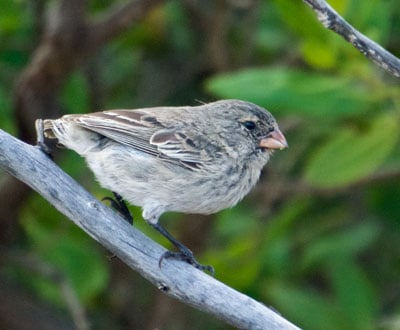
Among those that struck Darwin so greatly were the finches, with such varying diets as cactus and seeds, fruits and blood that are now named in his honor. Darwin would later base some of his thought from the supposing that these finches were all descendents of the same lineage.

Having collected a great deal of wildlife and stacks of notes, it wouldn't be until 1859 that Darwin would consolidate all of his observations into his Origin of Species, drastically and controversially altering western thought on the nature of nature.

For more information on Charles Darwin, see our links section.

» View the Galapagos Fast Facts

Call us toll free: 1-877-986-6435, 1-877-667-7445. Local US number: 407-412-9515.
Office Hours are 9:00am-6:00pm Mon-Fri. GMT -5
Home | About Us | About the Galapagos Islands | Galapagos Promotions | Galapagos Islands Trips | Galapagos Travel Info | Ecuador Trip Extensions | Contact Us
Privacy Policy © 1998-.
Member of the Ecuador Explorer.com guide to Ecuador, Quito and the Galapagos Islands
Back to Top